
What is chaga?
Chaga (Inonotus obliquus) isn't a typical mushroom at all — it's a dense, dark growth that forms slowly on birch trees in cold northern forests, including right here in Canada. Cracked open, it's burnt-charcoal black outside and rusty orange inside. We dual-extract it and put 500mg in every cup of Chaga Coffee.
Reviewed by Andrew Langevin — mycologist & contributing author, Mushroomology (Brill, 2026).
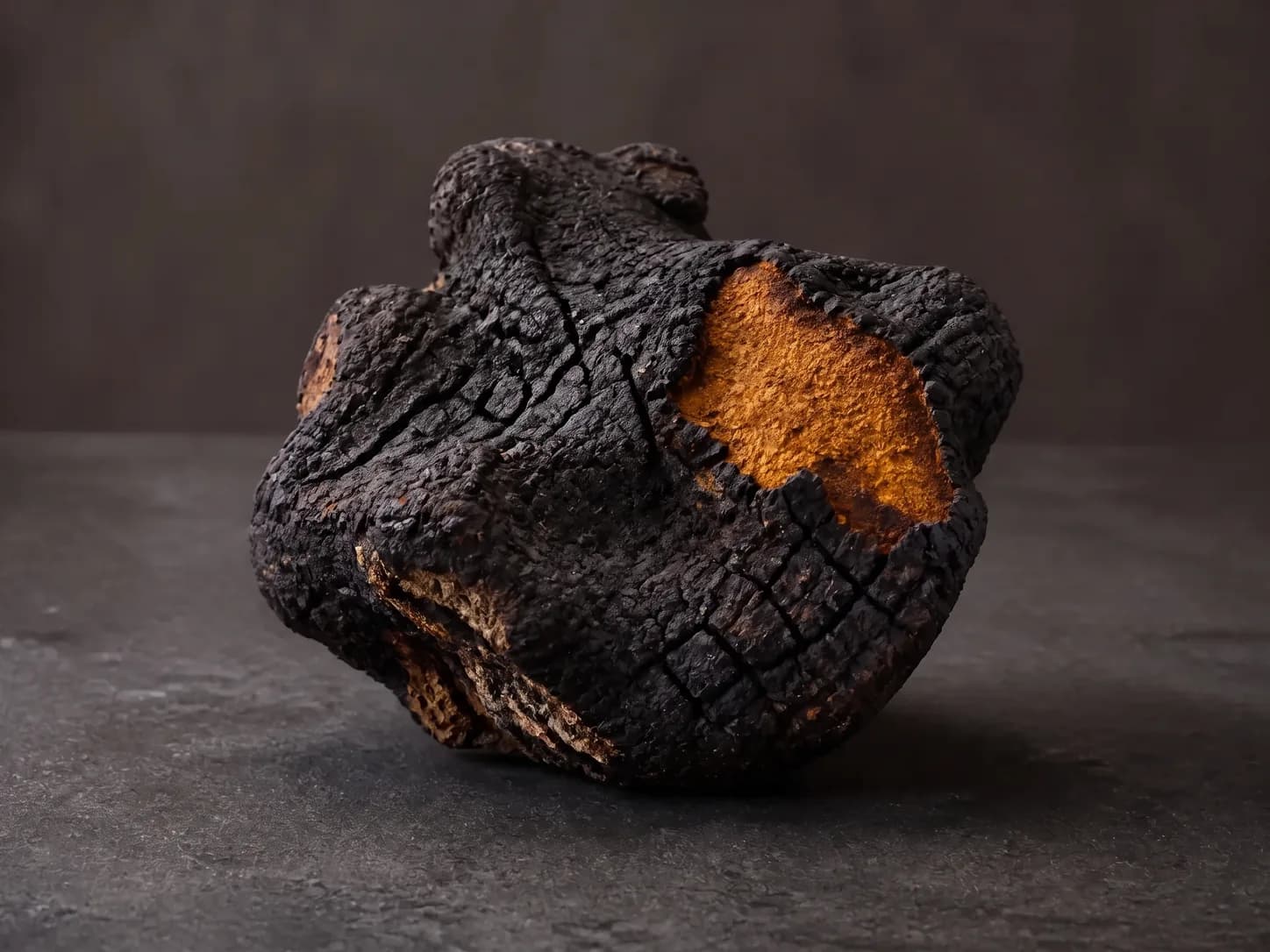
Whole chaga conk
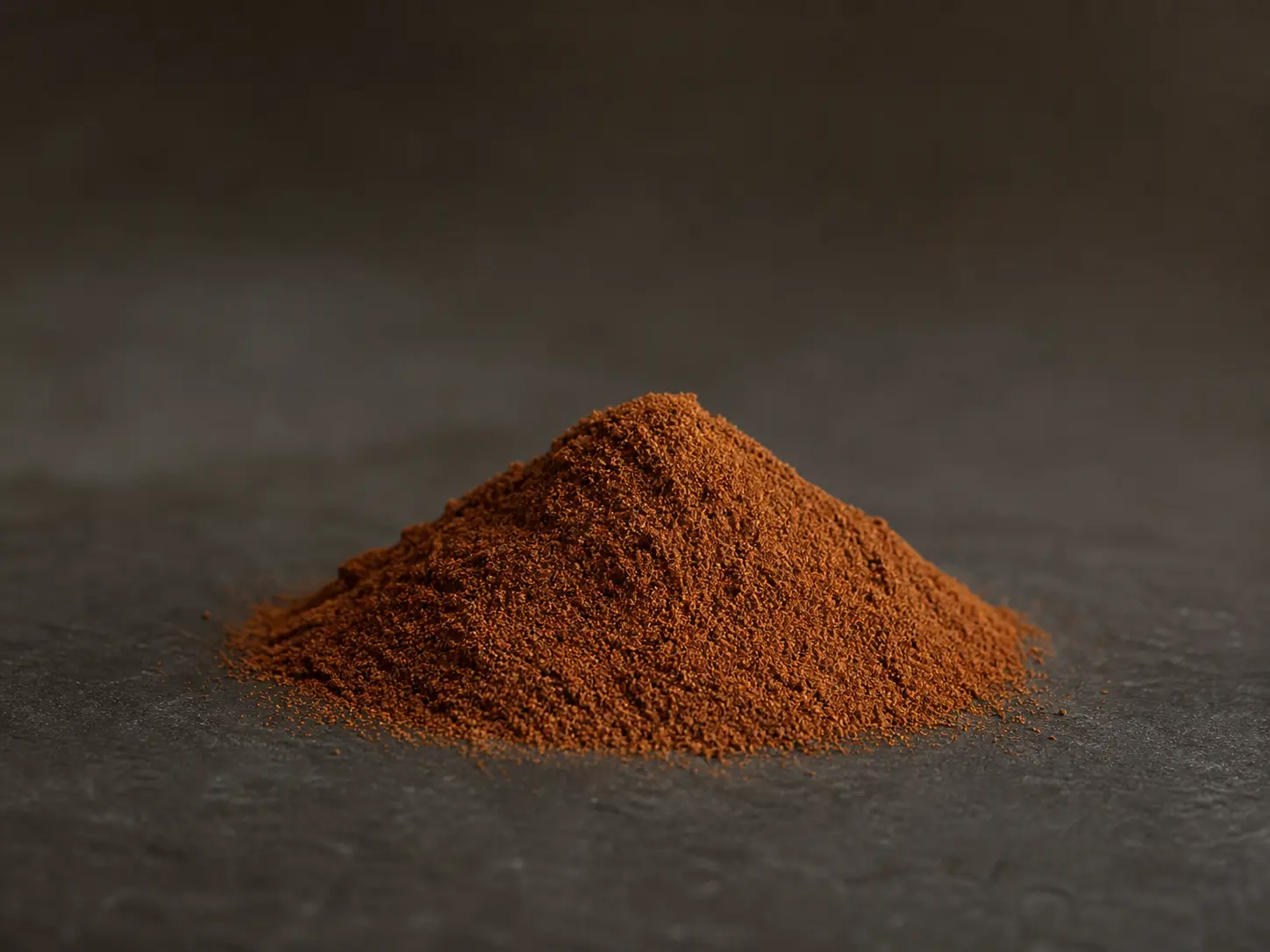
Chaga extract powder
The mushroom that grows like bark.
Find a white birch forest in Canada, Scandinavia, Siberia, or northern Asia and you may spot chaga: a black, cracked mass on the trunk that looks more like burnt wood than fungus. It grows extremely slowly — often over a decade — drawing its character from the birch tree itself.
People in northern countries have harvested chaga and brewed it as a tea for generations. It's one of the oldest continuously used wild-harvested fungi in the world, long before anyone put it in coffee.
From birch forest to dissolvable powder.
Raw chaga is hard as wood — you can't eat it, and steeping a chunk barely scratches the surface. Extraction is the only practical way to use it, which is why chaga has always been brewed, not eaten.
Our chaga is dual-extracted (water plus fermentation) from mycelium and fruiting material, concentrated, and dried into a powder that dissolves instantly. Every cup of Chaga Coffee carries 500mg, printed on the label.
Earthy depth that suits coffee.
Of our three mushrooms, chaga is the most at home in a dark drink — brewed on its own it has a mild, earthy, faintly vanilla-woody character. In Chaga Coffee we pair it with coconut milk powder, which gives the blend its rich, creamy body and subtle tropical undertone.
The result tastes like a smooth, creamy coffee. The chaga adds depth, not mushroom flavour.
Chaga, on the record.
| Species | Inonotus obliquus |
| Grows on | Birch trees in cold northern forests |
| Form | Dual-extracted powder (water + fermentation) |
| Amount per cup | 500mg, printed on the label |
| On the label | Organic chaga extract |
| Found in | Chaga Coffee |
What researchers have found.
This section summarizes published composition and characterization research about chaga as an ingredient. It is not a claim that Shyne products diagnose, treat, prevent, or cure any condition.
Researchers identified over 250 secondary metabolites in Inonotus obliquus, including β-glucans, triterpenoids (betulin, betulinic acid, lanosterol, inonotsdiol), polyphenols (styrylpyrones, inonoblins), and melanin. The dark sclerotium gets its characteristic black colour from high melanin concentration.
Fordjour et al., Frontiers in Pharmacology, 2023 ↗A quantitative LC-PDA-ELSD and LC-DAD-QToF analysis simultaneously characterized chaga's triterpenoids and phenolics. Key lanosterol-type triterpenes identified include betulinic acid — a compound that accumulates in chaga from its host Betula spp. (birch) bark.
Quantitative Analysis of Triterpenoids and Phenolics in Inonotus obliquus, PubMed 40854436, 2025 ↗Researchers sequenced chaga's transcriptome to map gene expression across different betulin substrates. RNA-Seq results confirmed terpenoid biosynthesis pathway activity, linking birch-host environment to specific metabolite composition.
RNA-Seq de Novo Assembly of Inonotus obliquus, PMC6770048, 2019 ↗Don't take our word — read the pack.
The full ingredient list and nutrition facts, exactly as printed on every pack that uses chaga.
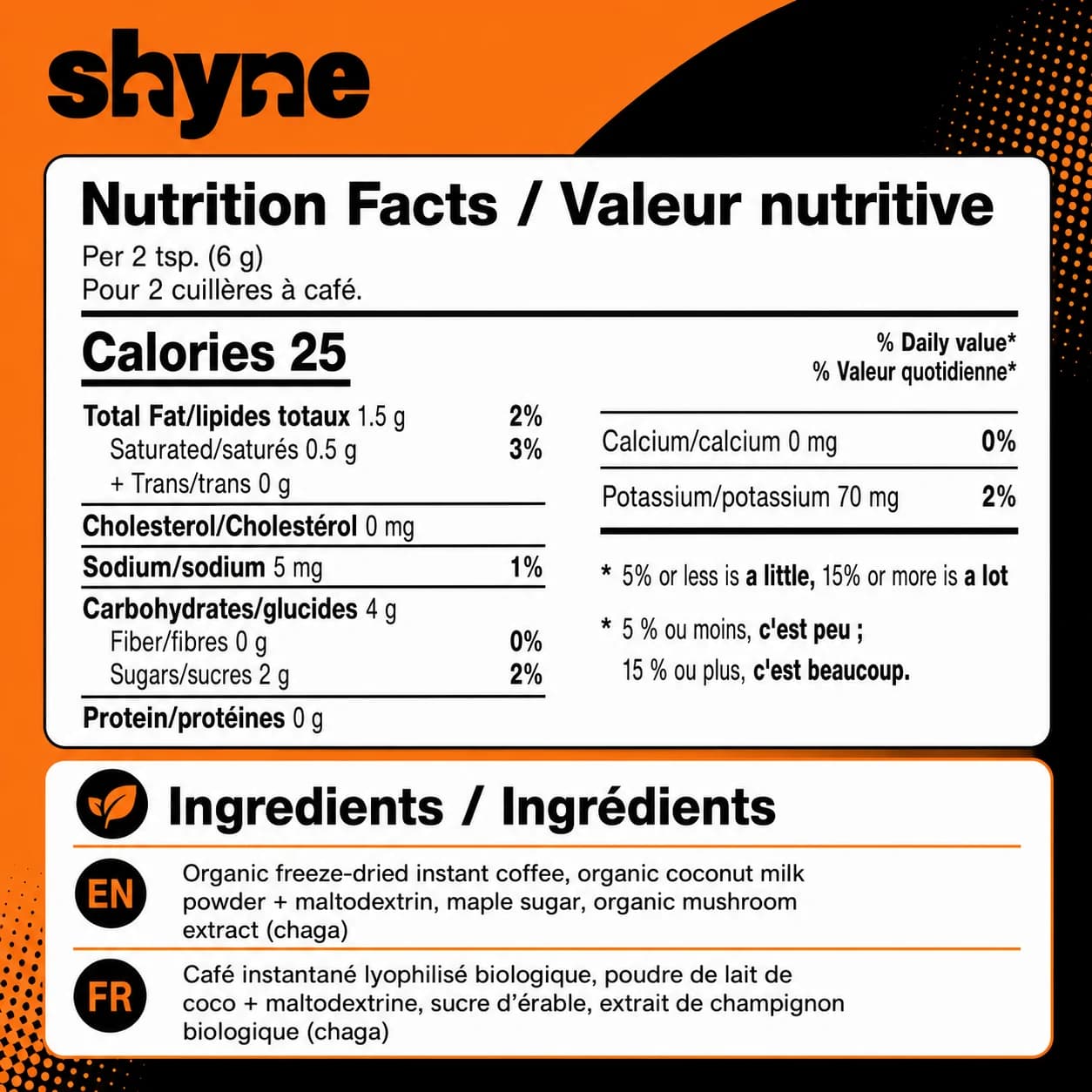
Chaga Coffee
Where you'll find it.
Asked & answered.
Is chaga good for you?
Chaga has been brewed as a tea in northern cultures for generations, and there's a lot of discussion about it online. Shyne is a coffee — a food, not a natural health product — so we don't make health claims. What we can tell you precisely: every cup contains 500mg of dual-extracted chaga, and the amount is printed on the label.
What does chaga taste like?
On its own, mild and earthy with a faint woody-vanilla character — one reason it blends so naturally into coffee. In Chaga Coffee, the coconut milk powder carries the flavour: rich, creamy, with a subtle tropical note.
Where does chaga come from?
Chaga grows wild on birch trees across the cold north — Canada, Scandinavia, Russia, and northern Asia. Ours is dual-extracted into a powder that dissolves completely.
Why extract it instead of using raw chaga?
Raw chaga is nearly as hard as the wood it grows on. Extraction has always been how people use it — historically as tea, in our case as a concentrated, measurable powder: 500mg per cup, every cup.
Taste what's on the label.
Every ingredient, measured and printed on the bag. Free shipping across Canada. 60-day money-back guarantee.