Andrew Langevin
Co-Founder
Mushroom Coffee and Gut Health: The Prebiotic Connection
Your gut is often called your "second brain"—and for good reason. The health of your digestive system affects everything from immunity to mood to cognitive function. Mushroom coffee offers unique compounds that may support gut health in ways regular coffee can't.
Let's explore the gut-mushroom connection and how your morning coffee could be supporting your microbiome.
The Gut Health Revolution
Why Gut Health Matters
Your gut is home to trillions of microorganisms—collectively called the microbiome—that influence:
- Immunity: 70-80% of immune cells live in the gut
- Mental health: 90% of serotonin is produced in the gut
- Digestion: Nutrient absorption and elimination
- Inflammation: Gut bacteria influence systemic inflammation
- Weight: Microbiome composition affects metabolism
- Brain function: The gut-brain axis connects digestive and cognitive health
A healthy microbiome is diverse and balanced. An unhealthy one—called dysbiosis—contributes to numerous health issues.
How Mushroom Coffee Supports Gut Health
The Beta-Glucan Advantage
The star compounds in medicinal mushrooms—beta-glucans—are also prebiotics:
What are prebiotics?
Prebiotics are non-digestible fibers that feed beneficial gut bacteria. Unlike probiotics (which are bacteria themselves), prebiotics nourish the good bacteria already in your gut.

Beta-glucans as prebiotics:
- Not digested in the stomach or small intestine
- Reach the colon intact
- Fermented by beneficial bacteria
- Produce short-chain fatty acids (SCFAs)
- SCFAs nourish gut lining and support immunity
Specific Mushroom Benefits for Gut Health
Lion's Mane:
- Research shows direct benefits for gut health
- May help protect stomach lining
- Contains prebiotic fibers
- Studies suggest anti-inflammatory effects in the digestive tract
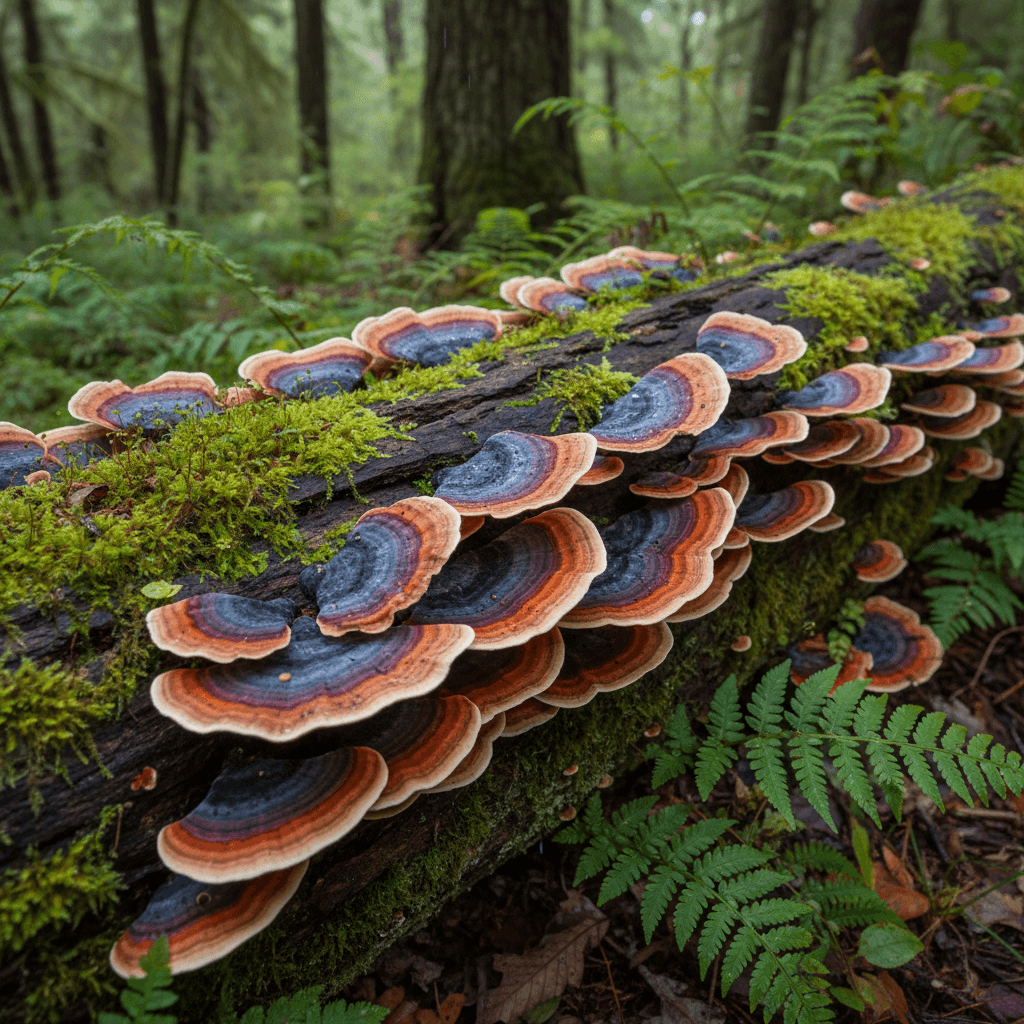
Turkey Tail:
- Most studied mushroom for gut microbiome
- Contains PSP and PSK polysaccharides
- Research shows positive effects on gut bacteria composition
- May increase beneficial bacteria like Bifidobacterium
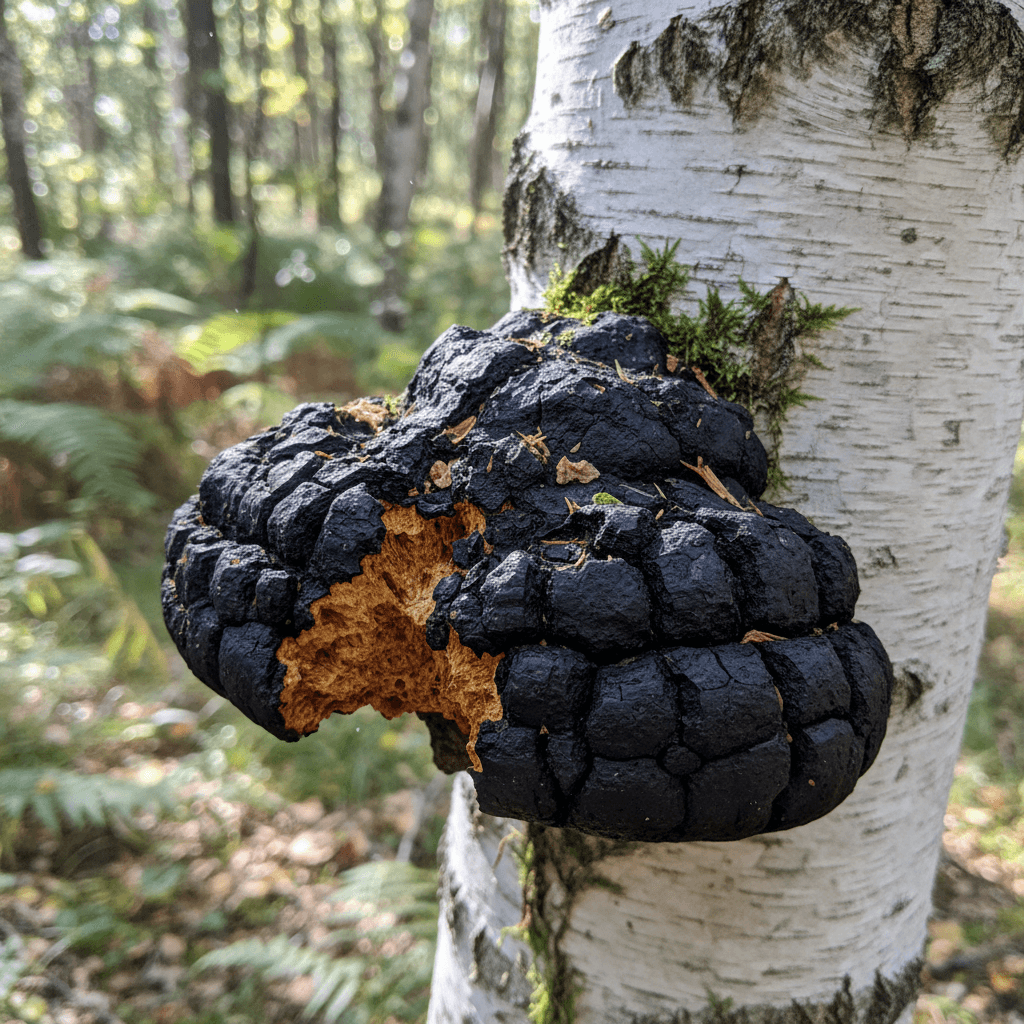
Chaga:
- Rich in fiber and beta-glucans
- Traditional use for digestive support
- Contains compounds that may support stomach health
- Antioxidant properties protect gut cells
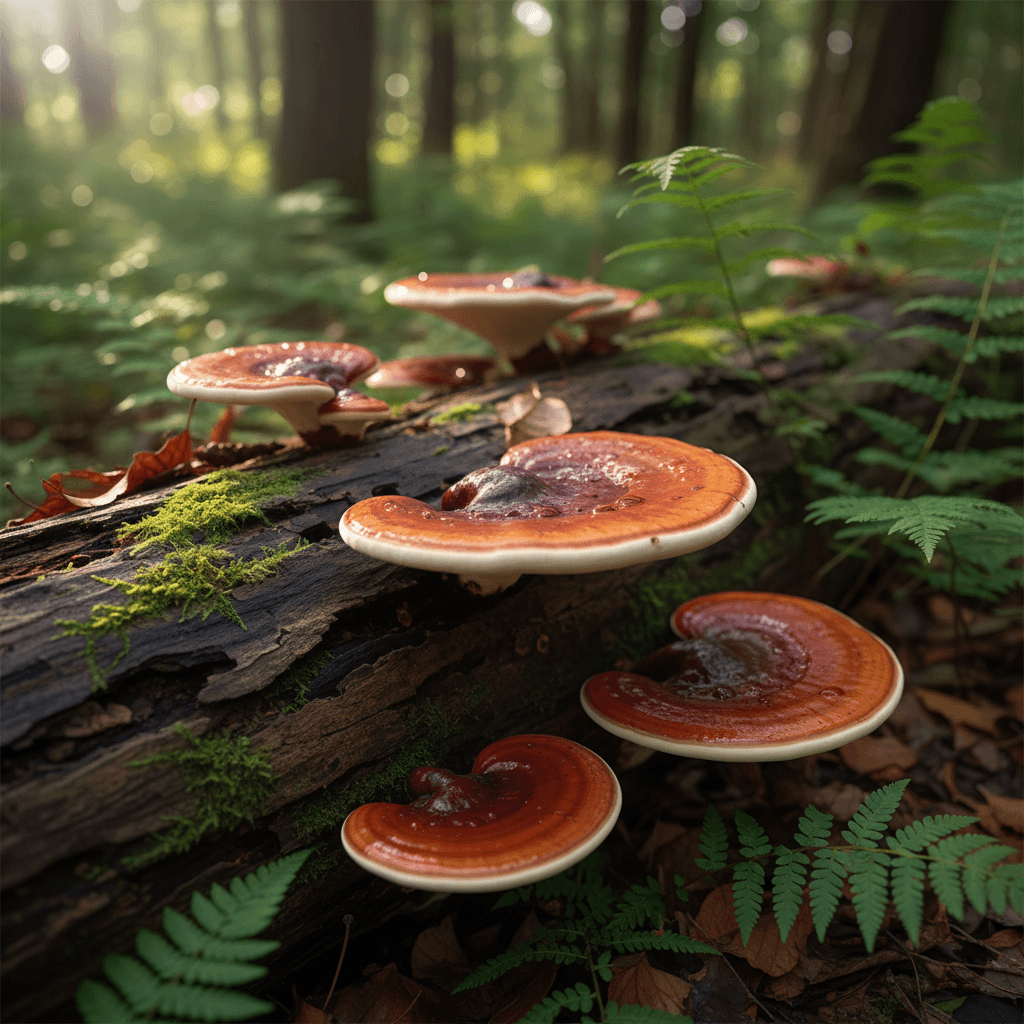
Reishi:
- Research suggests prebiotic effects
- May support gut barrier function
- Contains polysaccharides that benefit microbiome
- Anti-inflammatory compounds
The Gut-Brain Axis
Understanding the Connection
Your gut and brain communicate constantly through the gut-brain axis:
- Vagus nerve: Direct nerve connection
- Neurotransmitters: Gut bacteria produce many brain chemicals
- Immune system: Gut inflammation affects brain function
- Hormones: Gut produces hormones that affect mood and cognition
How Mushroom Coffee Supports This Axis
From the gut side:
- Beta-glucans feed beneficial bacteria
- Healthy bacteria produce neurotransmitters
- Reduced gut inflammation means reduced brain inflammation
- Strong gut barrier prevents "leaky gut" effects
From the brain side:
- Lion's Mane supports nerve health including the vagus nerve
- Reduced stress (via adaptogens) reduces gut-damaging cortisol
- Better sleep (via Reishi) allows gut repair
- Cognitive benefits may partly come through gut pathways
Coffee's Complex Relationship with Gut Health
Regular Coffee's Gut Effects
Coffee itself has mixed effects on digestion:
Potential positives:
- Contains polyphenols that may benefit gut bacteria
- Stimulates bile production (aids fat digestion)
- Some studies show positive microbiome effects
Potential negatives:
- Can irritate stomach lining (acidity)
- Stimulates cortisol (stress hormone)
- May speed transit too much (loose stools)
- Can worsen acid reflux
How Mushroom Coffee May Improve the Equation
Lower acidity:
- Many mushroom coffees are less acidic
- Mushroom compounds may buffer coffee's acidity
- Less stomach irritation for sensitive individuals
Adaptogenic balance:
- Reishi helps manage cortisol response
- Less stress hormone means less gut disruption
- May reduce coffee's stimulating effects on bowels
Prebiotic addition:
- Beta-glucans add gut-supportive compounds
- Turns a neutral or negative into a positive
- Coffee ritual now feeds your microbiome
The Science of Mushroom Prebiotics
What Happens When You Drink Mushroom Coffee
Step 1: Consumption
- You drink mushroom coffee containing beta-glucans and other polysaccharides
Step 2: Digestion
- Coffee is absorbed; caffeine enters bloodstream
- Beta-glucans pass through stomach and small intestine largely intact
Step 3: Fermentation (Colon)
- Beneficial bacteria ferment beta-glucans
- This produces short-chain fatty acids (SCFAs)
Step 4: Benefits
- SCFAs nourish colon cells
- Beneficial bacteria populations grow
- Gut barrier function improves
- Anti-inflammatory effects spread systemically
Research Highlights
Turkey Tail research:
A 2014 study showed Turkey Tail supplementation increased beneficial Bifidobacterium and Lactobacillus bacteria while reducing potentially harmful E. coli.
Lion's Mane research:
Studies show Lion's Mane may help protect against stomach ulcers and support gut lining health, possibly by inhibiting H. pylori bacteria growth.
General mushroom research:
Reviews conclude that medicinal mushrooms consistently show prebiotic effects and positive modulation of gut microbiome composition.
Signs Your Gut Might Need Support
Common Gut Health Issues
Digestive symptoms:
- Bloating after meals
- Irregular bowel movements
- Gas and discomfort
- Heartburn or acid reflux
Systemic signs:
- Low energy despite adequate sleep
- Brain fog or difficulty concentrating
- Frequent colds or infections
- Skin issues like acne or eczema
- Mood changes or anxiety
Potential contributors:
- Processed food diet
- Antibiotic use
- Chronic stress
- Poor sleep
- Low fiber intake
- Excessive sugar consumption
Building a Gut-Healthy Mushroom Coffee Routine
Daily Practice
Morning:
- Mushroom coffee with or after breakfast
- Include fiber-rich breakfast foods
- Stay hydrated throughout the morning
Throughout the day:
- Eat diverse plant foods (feed diverse bacteria)
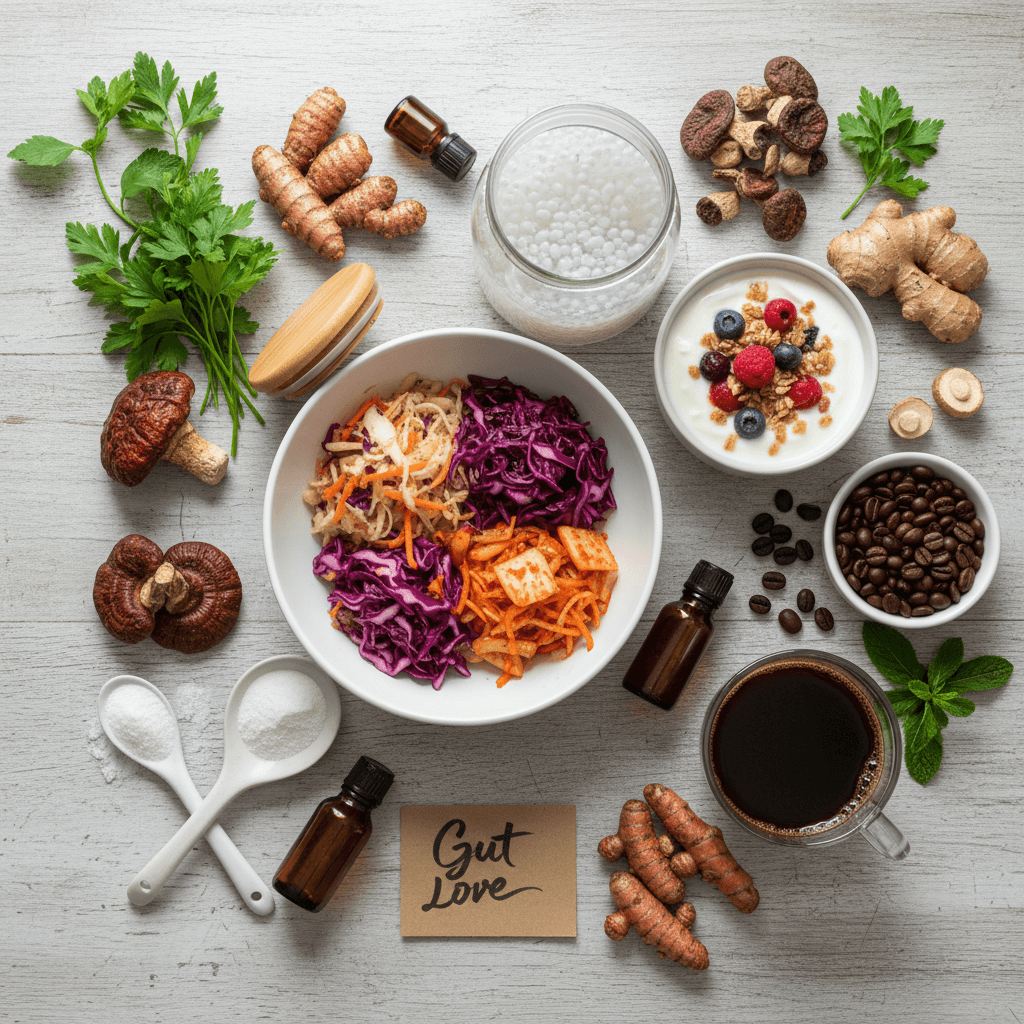
- Include fermented foods (probiotics)
- Minimize processed foods
- Manage stress
Evening:
- Consider Reishi tea (gut-healing while you sleep)
- Avoid eating too close to bedtime
- Prioritize quality sleep (gut repairs during sleep)
What to Eat With Mushroom Coffee
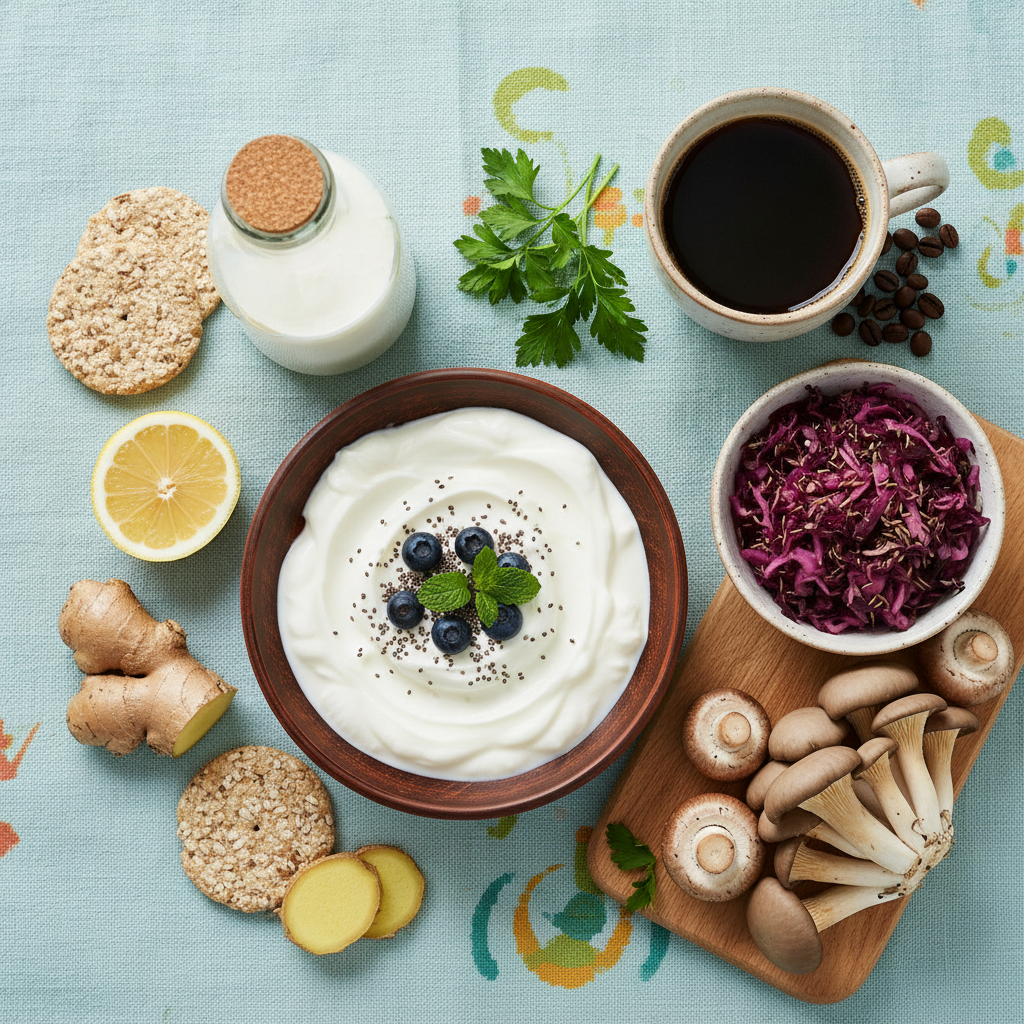
Synergistic breakfast options:
- Overnight oats: Fiber + prebiotic mushroom coffee = excellent gut support
- Fruit + yogurt: Probiotics + prebiotics = synbiotic effect
- Whole grain toast + avocado: Fiber feeds the bacteria mushrooms nourish
- Green smoothie: Diverse plant fibers + mushroom beta-glucans
Mushroom Coffee vs. Other Gut Supplements
| Option | Form | Benefit Type | Daily Use |
|---|---|---|---|
| Mushroom coffee | Beverage | Prebiotic + enjoyable ritual | Very easy |
| Probiotic capsules | Pills | Live bacteria | Moderate |
| Prebiotic powder | Powder | Fiber only | Easy |
| Fermented foods | Food | Probiotics + nutrients | Requires variety |
| Mushroom supplements | Capsules | Concentrated prebiotics | Moderate |
Mushroom coffee's advantage: Combines prebiotic benefits with a daily habit most people already have, making compliance effortless.
Common Questions About Gut Health
"Will mushroom coffee upset my stomach?"
For most people, no. Mushroom coffee is typically gentler than regular coffee. However:
- Start slowly if you have a sensitive stomach
- Drink with food to minimize any potential irritation
- Stay hydrated as coffee is a mild diuretic
- Note your response and adjust accordingly
"I have IBS—can I drink mushroom coffee?"
IBS is individual, and responses vary. Considerations:
- Caffeine can trigger some IBS symptoms
- Prebiotic fibers can help or aggravate depending on type
- Start with half serving to test your response
- Consult your gastroenterologist for personalized advice
"How long until I notice gut benefits?"
Gut microbiome changes take time:
- Digestive comfort: May notice within days to weeks
- Microbiome changes: Typically 2-6 weeks of consistent use
- Systemic benefits: 4-8 weeks as gut health improves
"Should I also take a probiotic?"
Prebiotics and probiotics work synergistically:
- Prebiotics (mushroom coffee) feed good bacteria
- Probiotics (supplements or fermented foods) add good bacteria
- Together they're more effective than either alone
- Consider adding fermented foods like yogurt, kefir, or sauerkraut
Who Should Be Cautious
Conditions Requiring Care
Inflammatory bowel disease (IBD):
- Crohn's and ulcerative colitis require careful fiber management
- Consult gastroenterologist before adding new supplements
SIBO (Small Intestinal Bacterial Overgrowth):
- Prebiotics can feed overgrown bacteria
- May need to treat SIBO before adding prebiotics
Recent antibiotic use:
- Antibiotics disrupt microbiome
- May be good time to add prebiotics, but start slowly
Immune-compromised individuals:
- Mushrooms are immunomodulators
- Consult healthcare provider
The Bigger Picture: Gut Health Lifestyle
Mushroom Coffee as Part of the Solution
Optimal gut health involves multiple factors:
Diet:
- Diverse plant foods (30+ different plants weekly)
- Fermented foods regularly
- Limited processed foods and sugar
- Adequate fiber intake
Lifestyle:
- Quality sleep (7-9 hours)
- Stress management
- Regular movement
- Adequate hydration
Targeted support:
- Mushroom coffee (prebiotic + enjoyable)
- Probiotic foods or supplements if needed
- Professional guidance for specific conditions
Mushroom coffee isn't a complete gut solution, but it's an easy, enjoyable way to add prebiotic support to your daily routine.
Frequently Asked Questions
Do I need to take mushroom coffee forever for gut benefits?
While consistent use provides the best benefits, even periodic use contributes to gut health. Think of it as nourishing your microbiome—more is generally better, but some is better than none.
Can mushroom coffee replace my probiotic?
They serve different functions. Probiotics add bacteria; mushroom coffee feeds bacteria. Ideally, use both for synergistic benefits.
Will mushroom coffee make me poop?
It may. Coffee stimulates bowel movements for many people. The mushrooms shouldn't significantly change this effect. If regular coffee is fine for you, mushroom coffee should be too.
Is mushroom coffee safe with acid reflux?
Many people with reflux tolerate mushroom coffee better than regular coffee due to lower acidity. However, individual responses vary. Test with a small amount.
The Bottom Line
Your gut microbiome is foundational to your health—affecting everything from immunity to mood to cognitive function. Mushroom coffee offers a unique way to support this crucial system:
- Beta-glucans feed beneficial gut bacteria
- Prebiotic effects improve microbiome composition
- Anti-inflammatory compounds support gut lining
- Gut-brain axis benefits affect whole-body health
Unlike gut supplements that feel like medicine, mushroom coffee is an enjoyable daily ritual that happens to support your digestive health. It's not a complete gut solution, but it's a meaningful contributor to a gut-healthy lifestyle.
Your morning coffee can do more than wake you up—it can nourish the trillions of organisms that support your health.
Support your gut health: Our Balance Blend with Turkey Tail is designed specifically for digestive support and microbiome health. Try it risk-free with our 60-day guarantee.
Related Reading: