Nicole DiPietro
Co-Founder & Master Blender
How Much Caffeine Is in Mushroom Coffee? The Complete Guide
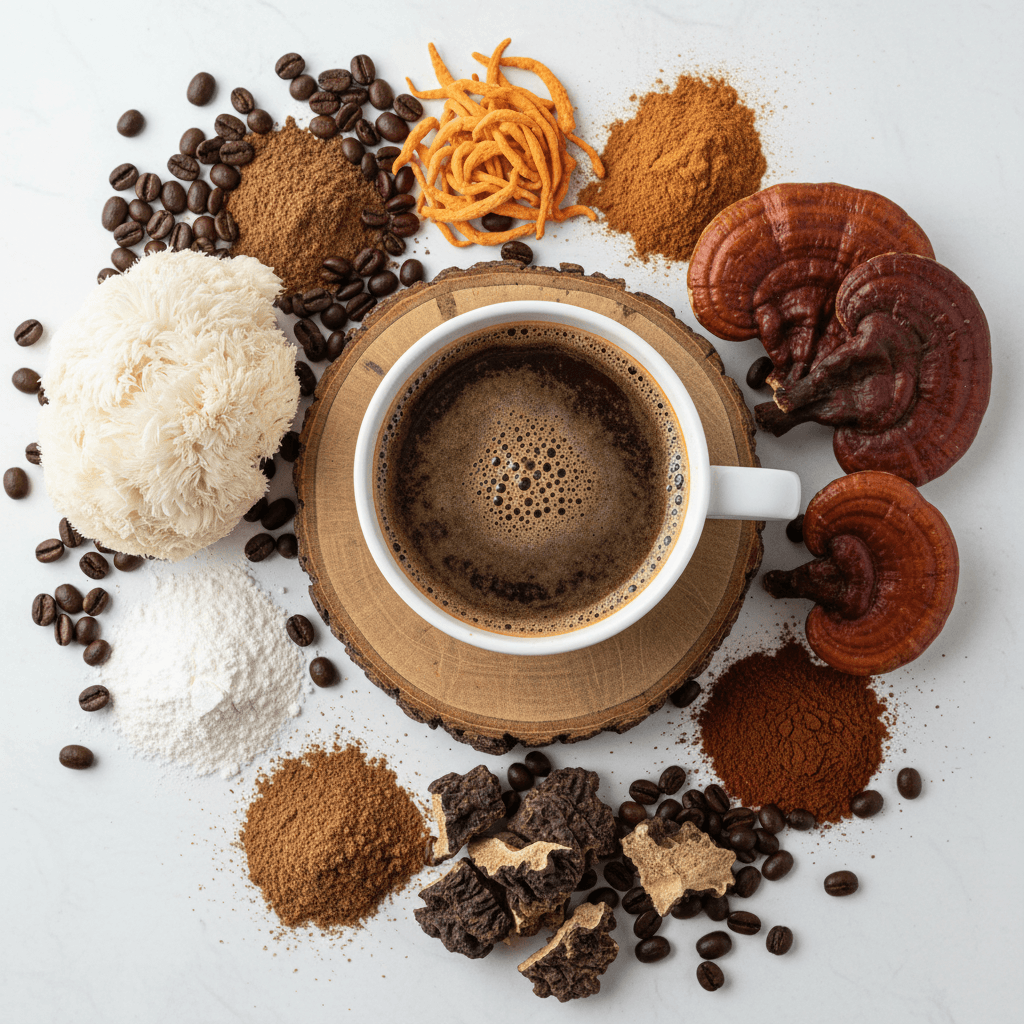
If you're considering mushroom coffee, caffeine content is probably high on your list of questions. After all, for many people, the appeal of mushroom coffee is the reduced caffeine—the promise of alertness without the jitters, crashes, or 3am ceiling-staring.
But how much caffeine are we actually talking about? Does it vary between brands? And how do you know if mushroom coffee has the right amount of caffeine for you?
This guide breaks down the numbers, compares popular brands, and helps you figure out your ideal caffeine sweet spot.
The Quick Answer
Most mushroom coffee contains 35-80mg of caffeine per serving—roughly half of what you'd get from regular coffee (95-150mg per cup).
Some mushroom coffee alternatives like MUD\WTR contain even less (35mg), while certain ground mushroom coffees approach regular coffee levels (80-100mg).
The variation is significant, which is why understanding specific brands matters.
Caffeine by Brand: The Complete Breakdown
Instant Mushroom Coffee
| Brand | Caffeine per Serving | Mushroom Content | Price/Serving |
|---|---|---|---|
| Shyne Coffee | 65-75mg | 500mg single mushroom | $1.30-1.73 |
| RYZE | 48mg | 2,000mg (6 mushrooms) | $1.20-1.60 |
| Four Sigmatic Instant | 50mg | ~250mg | $1.50-2.00 |
| The Youth Effect | ~50mg | 6-mushroom blend | $0.80 |
| Everyday Dose | 45mg | 1,500mg blend | $1.80-2.50 |
Ground Mushroom Coffee
| Brand | Caffeine per Cup | Notes |
|---|---|---|
| Four Sigmatic Ground | 80-90mg | Closer to regular coffee |
| Urban Calm | ~95mg | Full-caffeine with mushrooms added |
| Laird Superfood | 80-100mg | Medium roast, functional blend |
Coffee Alternatives (Not Actually Coffee)
| Brand | Caffeine per Serving | Source |
|---|---|---|
| MUD\WTR | 35mg | Black tea (not coffee) |
| Mud\Wtr :rest | 0mg | Caffeine-free blend |
How This Compares to Other Drinks
For context, here's where mushroom coffee fits in the caffeine spectrum:
| Beverage | Caffeine (mg) |
|---|---|
| Cold brew coffee (12oz) | 150-240 |
| Drip coffee (8oz) | 95-165 |
| Espresso (double shot) | 63-80 |
| Mushroom coffee (instant) | 35-80 |
| Red Bull (8.4oz) | 80 |
| Black tea (8oz) | 40-70 |
| Green tea (8oz) | 25-50 |
| Coca-Cola (12oz) | 34 |
| Decaf coffee (8oz) | 2-15 |
Mushroom coffee sits in a unique middle zone—more than tea, less than regular coffee, roughly equivalent to a can of Red Bull but with a completely different effect profile.
Why Caffeine Content Varies Between Brands
Several factors explain the caffeine range:
1. Coffee-to-Mushroom Ratio
Brands that use more mushroom powder relative to coffee have less caffeine. RYZE uses a high mushroom ratio (2,000mg of mushrooms per serving), which results in lower caffeine. Shyne uses 500mg of mushrooms but higher-quality coffee, landing at 65-75mg.
2. Coffee Type and Roast
Contrary to popular belief, darker roasts actually have slightly less caffeine than lighter roasts (roasting burns off some caffeine). Brands using lighter roasts or specific high-caffeine varietals will have more caffeine per cup.
3. Instant vs Ground
Instant coffee is made by brewing coffee, then drying it into powder. This process affects caffeine extraction. Ground mushroom coffee, brewed fresh, typically delivers more caffeine because you're extracting directly from the beans.
4. Serving Size
"One serving" varies between brands. Some measure by weight (2g), others by volume (1 scoop), and scoop sizes differ. Always check the nutrition label for caffeine per serving, not just per "cup."
Finding Your Ideal Caffeine Level
The right caffeine amount depends on your individual physiology, tolerance, and goals.
Signs You're Getting Too Much Caffeine
- Jitters, shakiness, or trembling hands
- Racing heart or heart palpitations
- Anxiety or feeling "on edge"
- Difficulty sleeping (even if you stop by early afternoon)
- Digestive issues or nausea
- Afternoon crashes that require more caffeine to overcome
If regular coffee (95-150mg per cup) causes any of these, mushroom coffee's 50-80mg range might hit your sweet spot.
Signs You're Getting Too Little Caffeine
- Still feeling groggy after your morning cup
- Needing a second cup to feel alert
- Missing the "kick" you got from regular coffee
- Caffeine withdrawal symptoms when switching (headache, fatigue, irritability)
If this is you, try a higher-caffeine mushroom coffee (like ground options at 80-100mg) or consider blending mushroom and regular coffee.
The Caffeine Sensitivity Spectrum
High Sensitivity (Slow Metabolizers)
- Feel effects from small amounts (30-50mg)
- Caffeine stays in system longer (half-life of 6-10+ hours)
- More likely to experience anxiety and sleep disruption
- Best mushroom coffee choice: Lower-caffeine options like RYZE (48mg), MUD\WTR (35mg), or Everyday Dose (45mg)
Moderate Sensitivity (Average Metabolizers)
- Comfortable with 100-200mg daily
- Can drink coffee until early afternoon without sleep issues
- Occasional jitters with high intake
- Best mushroom coffee choice: Mid-range options like Shyne (65-75mg) or Four Sigmatic Instant (50mg)
Low Sensitivity (Fast Metabolizers)
- Can drink coffee late and still sleep fine
- Rarely experience jitters or anxiety
- Need higher amounts to feel alert
- Best mushroom coffee choice: Ground mushroom coffee (80-100mg) or supplement mushroom coffee with regular coffee
Genetic Factors
Your caffeine metabolism is largely determined by the CYP1A2 gene. About 50% of people are "slow metabolizers" who process caffeine slowly, leading to stronger and longer-lasting effects. The other half are "fast metabolizers" who clear caffeine quickly.
If you've always been "sensitive to caffeine," you likely have the slow metabolizer variant. Mushroom coffee's lower caffeine content may work significantly better for you than trying to moderate regular coffee intake.
Caffeine and the Adaptogens: A Different Effect
Here's something important: mushroom coffee doesn't just have less caffeine—it may actually feel different even accounting for the lower dose.
Why Mushroom Coffee Feels Smoother
L-Theanine-Like Effects
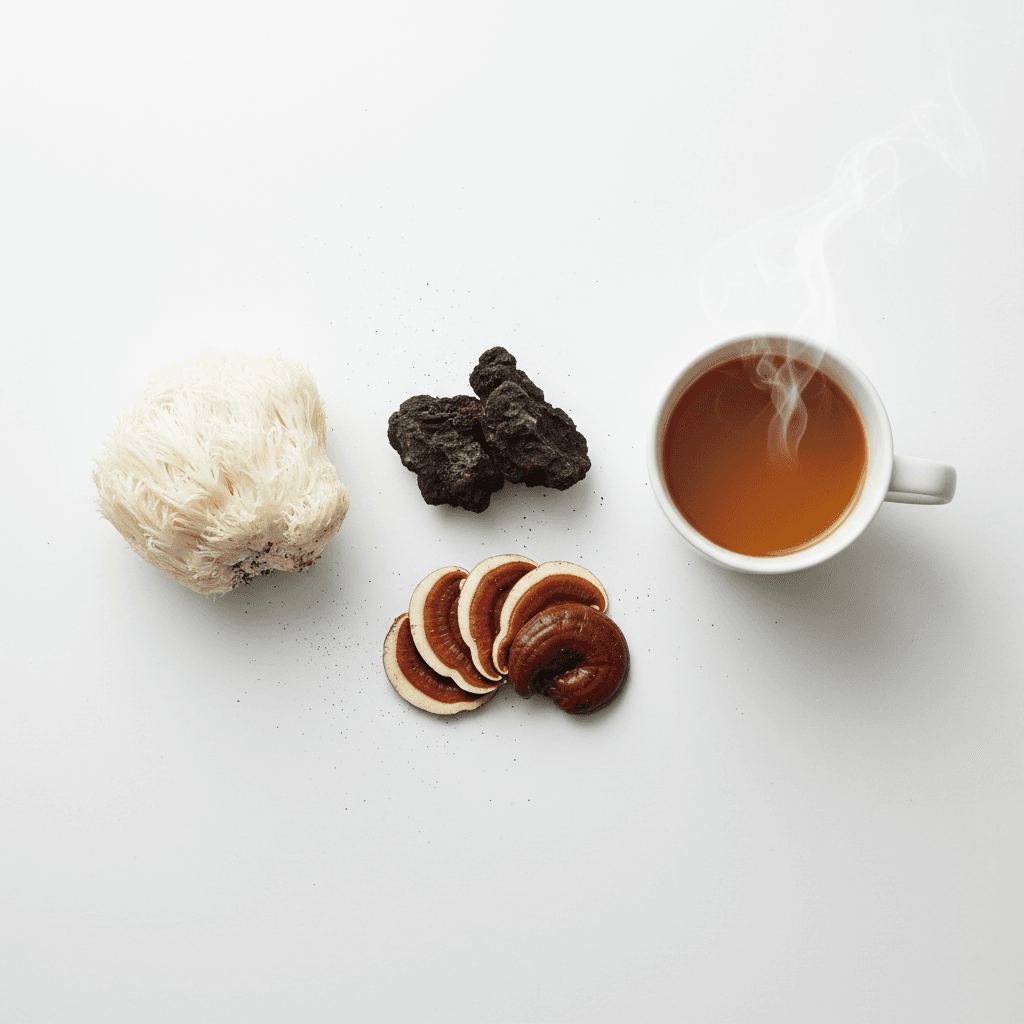
Some functional mushrooms (particularly Lion's Mane and Reishi) may have calming properties similar to L-theanine, the amino acid in tea that promotes "calm alertness." This could smooth caffeine's stimulating effects.
Adaptogenic Modulation
Adaptogens help the body manage stress by regulating cortisol. Since caffeine triggers cortisol release, adaptogens may buffer this response, reducing the "wired" feeling that comes with coffee's stress-hormone spike.
Lower Acidity
Mushroom coffee is typically less acidic than regular coffee. High acidity can irritate the stomach and contribute to the "jittery" feeling some people experience.
This is why many people report feeling alert but calm on mushroom coffee—not just "less caffeinated," but qualitatively different.
How to Transition: Managing Caffeine Changes
If you're switching from regular coffee to mushroom coffee, expect an adjustment period.
Week 1: Potential Withdrawal
If you normally consume 200-400mg of caffeine daily and switch to 50-80mg, you may experience:
- Headaches (most common)
- Fatigue and low energy
- Irritability or mood changes
- Difficulty concentrating
These symptoms typically peak at days 2-3 and resolve within a week.
Strategies for a Smooth Transition
Gradual Reduction
- Week 1: Replace one cup of regular coffee with mushroom coffee
- Week 2: Replace two cups
- Week 3: Full switch
Blended Approach
Mix mushroom coffee with regular instant coffee, gradually shifting the ratio toward mushroom coffee over 2-3 weeks.
Timing Adjustment
If you normally have three cups by noon, try two mushroom coffees—one at waking, one mid-morning. The adaptogens may provide more sustained energy than you expect.
Daily Intake: How Much Is Safe?
FDA Guidelines
The FDA considers 400mg of caffeine daily as generally safe for healthy adults. That's equivalent to:
- About 4 cups of regular coffee
- 6-8 cups of mushroom coffee (at 50-80mg each)
Most people drinking mushroom coffee won't come close to this limit.
Practical Daily Limits
Conservative (high sensitivity): 100-150mg daily
- 2-3 cups of mushroom coffee
Moderate (average sensitivity): 200-300mg daily
- 3-4 cups of mushroom coffee, or 2 mushroom + 1 regular
Liberal (low sensitivity): 300-400mg daily
- If you need this much, mushroom coffee alone may not provide enough. Consider a hybrid approach.
Pregnancy and Nursing
Current guidelines recommend limiting caffeine to 200mg daily during pregnancy. Mushroom coffee's lower caffeine content makes it easier to stay within limits, but note: there's limited research on functional mushrooms during pregnancy. Consult your healthcare provider before consuming.
Timing: When to Drink for Best Results
Morning (Best Time)
Caffeine works by blocking adenosine receptors. Adenosine builds up throughout the day, making you progressively sleepier. Drinking coffee when adenosine is already low (first thing in the morning) may blunt its effects.
Optimal timing: 90-120 minutes after waking, when cortisol levels naturally dip and adenosine starts building.
Afternoon Cutoff
Caffeine's half-life (time to clear half from your system) is 5-6 hours for average metabolizers, up to 10+ hours for slow metabolizers.
Conservative cutoff: No caffeine after 12pm
Moderate cutoff: No caffeine after 2pm
Because mushroom coffee has less caffeine, some people find they can drink it later than regular coffee without sleep disruption. But individual variation matters—experiment to find your own cutoff.
Pre-Workout
If using mushroom coffee for exercise, drink it 30-60 minutes before training. The caffeine will peak just as you start, and the adaptogens (particularly Cordyceps, if present) may support oxygen utilization and endurance.
FAQ
Does mushroom coffee have less caffeine than decaf?
No. Decaf coffee contains 2-15mg per cup. Most mushroom coffee contains 35-80mg—significantly more than decaf but less than regular.
Can I drink mushroom coffee if I'm caffeine-sensitive?
Yes, but choose lower-caffeine options (RYZE at 48mg, MUD\WTR at 35mg). Start with half a serving to assess your response.
Will I feel less awake with mushroom coffee?
You may feel differently awake—alert but calmer. If you need intense, rapid stimulation, mushroom coffee's lower caffeine might feel insufficient initially.
Does the type of mushroom affect caffeine content?
No. Functional mushrooms contain zero caffeine. The caffeine comes entirely from the coffee portion. Mushroom type only affects the adaptogenic compounds.
How accurate are caffeine content labels?
Lab tests have shown some brands' caffeine claims are inaccurate by 20-30%. Established brands with third-party testing tend to be more reliable.
Can I mix mushroom coffee with regular coffee?
Yes. This is a great way to get more caffeine while still benefiting from adaptogens. Mix half and half, or find your preferred ratio.
Bottom Line
Mushroom coffee typically contains 35-80mg of caffeine—about half of regular coffee. This makes it ideal for people who experience jitters, anxiety, or crashes from regular coffee, or anyone wanting to reduce caffeine intake without giving up their morning ritual.
The "right" amount of caffeine is personal. If you're switching from regular coffee, expect an adjustment period. If you're caffeine-sensitive, start with lower-caffeine brands. If you need more stimulation, try ground mushroom coffee or blend with regular.
The adaptogens in mushroom coffee may also modulate how caffeine feels—not just less, but smoother. That's the real promise: not deprivation, but a better relationship with your daily cup.
Related Reading:
- Mushroom Coffee for Caffeine Sensitivity
- Mushroom Coffee vs Matcha vs Yerba Mate
- Mushroom Coffee vs Regular Coffee
- The Best Time to Drink Mushroom Coffee
This article is for informational purposes only. Caffeine affects everyone differently. If you have health conditions or take medications, consult your healthcare provider about appropriate caffeine intake.