Shyne Coffee Team
Content Team
Mushroom Coffee and Winter Routines: A Careful Guide
A Careful Note Before You Read
This article is educational. It discusses winter routines, coffee, caffeine, and mushroom ingredients in general. It is not medical advice, and it is not a claim that Shyne products diagnose, treat, prevent, or cure any condition.
Seasonal Affective Disorder is a recognized mental-health condition. If winter changes affect your daily life, work, relationships, appetite, energy, or safety, speak with a qualified healthcare professional. Do not use coffee, mushroom coffee, supplements, or food products as a replacement for care.
Canadian winters can make mornings feel harder. The days are shorter, sunlight is limited, and many people notice changes in energy, routine, and motivation. That does not mean a coffee product is the answer. It means your routine may need more structure.
This guide focuses on practical, non-medical choices:
- morning light exposure when possible
- caffeine timing
- breakfast and hydration
- movement
- consistent wake times
- when to ask for qualified guidance
- how to describe beverage facts only
Keep Clinical Questions Separate
Some winter changes are mild and routine-based. Others are persistent, disruptive, or clinical. Those situations belong with qualified professionals, not food-product marketing.
A food brand should be careful on this topic. A morning drink should be described by product facts, not by clinical outcomes.
A safer way to discuss this topic is to separate three ideas:
| Topic | Careful framing |
|---|---|
| Clinical concerns | Questions to discuss with a healthcare professional |
| Winter routine | Daily habits that can be organized and tracked |
| Mushroom coffee | A coffee product that can be compared by caffeine, taste, ingredients, and preparation |
That boundary keeps the article useful without turning a morning drink into medical guidance.
What Makes Winter Mornings Feel Different
Winter can change the context around your morning. For many people, the issue is not one single factor. It is the combination of darkness, schedule changes, less outdoor time, heavier meals, less movement, and inconsistent sleep.
Useful questions include:
- What time do you wake up?
- Do you get outdoor light in the morning?
- Do you eat before or after coffee?
- How much caffeine do you drink before noon?
- Do you drink caffeine late in the day?
- Are you moving less than usual?
- Are symptoms affecting daily life?
Those questions are practical. They do not require a product claim.
Caffeine Timing Matters in Winter
Coffee can be part of a winter routine, but caffeine timing matters. A morning cup may fit well for some people. Late-day caffeine may make evenings harder for others, especially if sleep is already inconsistent.
Health Canada provides guidance on caffeine intake, including lower limits for people who are pregnant, breastfeeding, or planning pregnancy. Individual tolerance varies.
A simple winter caffeine audit can help:
| Track | Why it matters |
|---|---|
| First caffeine time | Shows whether coffee is tied to your wake routine |
| Total daily caffeine | Helps compare coffee, tea, energy drinks, and chocolate |
| Last caffeine time | Helps identify late-day caffeine patterns |
| Food timing | Shows whether coffee is replacing breakfast |
| Sleep schedule | Helps separate caffeine timing from bedtime habits |
If caffeine seems connected to sleep disruption, jitters, or uncomfortable body sensations, consider discussing your pattern with a healthcare professional.
Light, Movement, and Food Come Before Product Claims
The most useful winter routine advice is usually basic:
- Get outdoor light early in the day when possible.
- Keep wake time reasonably consistent.
- Eat a real breakfast if coffee alone leaves you shaky or distracted.
- Move your body, even briefly.
- Avoid using caffeine to push through every low-energy moment.
- Make evenings easier by setting a caffeine cutoff.
- Ask for professional help when symptoms are persistent or disruptive.
These are routine choices, not promises. They also matter more than which coffee brand someone buys.
What Mushroom Research Can and Cannot Say Here
Functional mushrooms such as Lion's Mane, Chaga, and Turkey Tail are discussed in research for different compounds, including polysaccharides, triterpenes, hericenones, and erinacines. That research is ingredient research.
It should stay in the ingredient-research lane. A finished coffee drink is not the same as a clinical study material or professional care.
A careful article can say:
- Lion's Mane contains compounds studied in cognitive-function research.
- Chaga contains compounds studied in antioxidant-related research.
- Turkey Tail contains polysaccharides studied in microbiome and immune-related research.
- The research varies by extract type, dose, study design, and population.
- A finished coffee product is not the same as a clinical study material.
That is enough context for readers without overpromising.
Where Shyne Fits
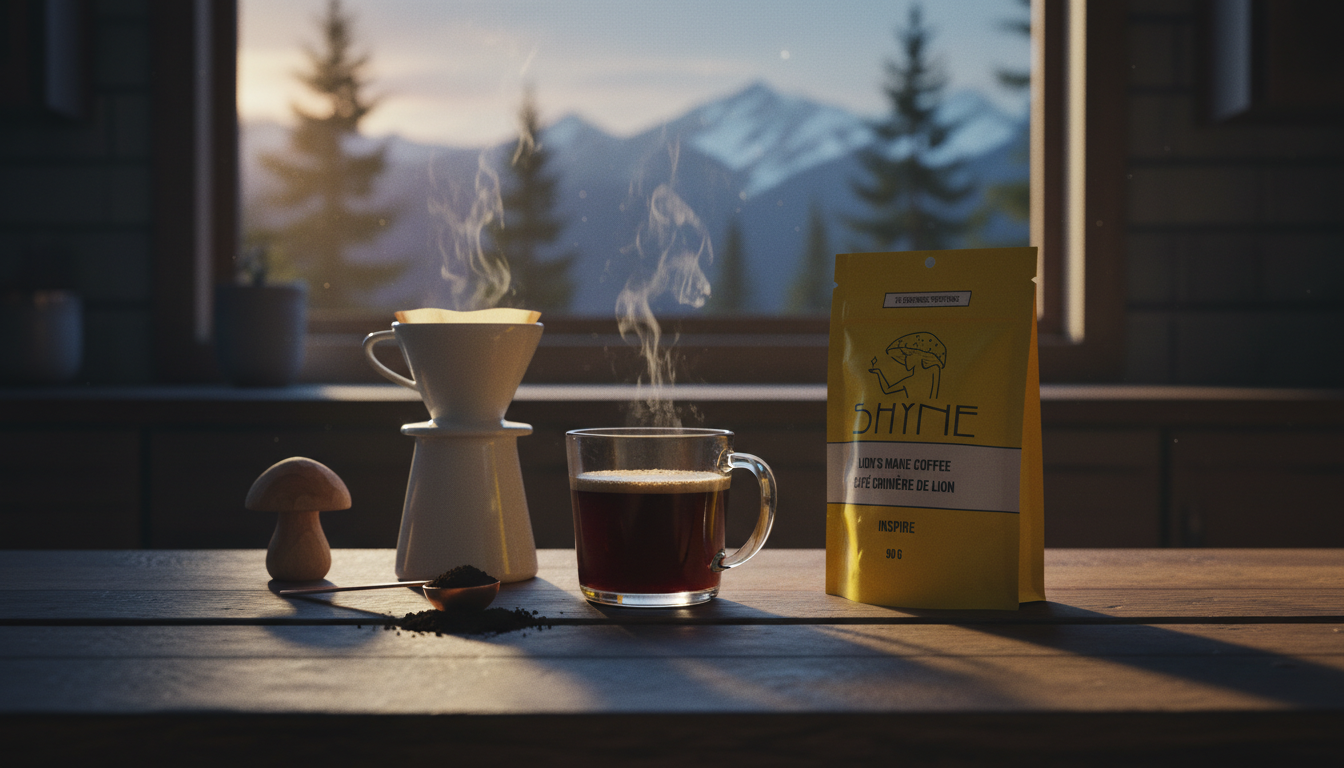
Shyne should be described by product facts only.
The safest details are:
- coffee format
- caffeine amount
- mushroom extract amount
- flavour notes
- ingredients
- preparation method
- serving size
- sourcing or testing information when available
If someone chooses Shyne during winter, the decision should be based on taste, caffeine amount, ingredient preference, preparation convenience, and morning routine fit.
A Simple Winter Morning Routine Audit
Use this for one week. Do not change everything at once.
| Day | Track |
|---|---|
| Morning light | Did you get outside or sit near a bright window? |
| Coffee timing | What time was your first cup? |
| Breakfast | Did you eat before or near coffee? |
| Movement | Did you walk, stretch, or exercise? |
| Caffeine cutoff | What time was your last caffeine? |
| Evening routine | Was bedtime consistent? |
| Notes | What felt easier or harder? |
After a week, look for patterns. If the pattern is mild and routine-based, you may have useful information. If the pattern is persistent, intense, or affecting your life, bring those notes to a healthcare professional.
What Not to Do
Do not use mushroom coffee as:
- a SAD treatment
- a substitute for light therapy or medical care
- a response to persistent low mood
- a replacement for prescribed medication
- a reason to delay professional help
- proof that a mushroom ingredient works for a condition
Those boundaries protect readers and keep the brand in the food-product lane.
Frequently Asked Questions
Can this article replace professional guidance?
No. This article is only a routine and caffeine-timing guide. Persistent or disruptive changes should be discussed with a qualified healthcare professional.
Can I use Shyne as part of a winter morning routine?
Yes, if coffee fits your routine and your personal caffeine guidance. Describe the choice by taste, caffeine amount, preparation, and ingredients, not by mental-health outcomes.
How should Lion's Mane be described here?
Keep it factual. Lion's Mane contains compounds studied in cognitive-function research. That does not turn a finished drink into clinical guidance.
What should I do if winter affects my daily life?
Speak with a qualified healthcare professional. This is especially important if changes are persistent, severe, or affect work, relationships, appetite, sleep, safety, or daily functioning.
Is light therapy the same as a wellness routine?
No. Light therapy is a clinical topic and should be discussed with a healthcare professional. General routine habits, such as morning outdoor light and consistent wake times, are not a replacement for care.
The Bottom Line
Winter routines are worth discussing. Seasonal Affective Disorder should be handled carefully.
The safest takeaway is simple: organize the basics first. Track light, caffeine timing, food, movement, and sleep. If symptoms are persistent or disruptive, get qualified help.
Where Shyne fits: Shyne can be compared as a lower-caffeine mushroom coffee by taste, ingredients, caffeine amount, and convenience.
Sources
- Health Canada: Caffeine in Foods
- CAMH: Seasonal Affective Disorder
- NCCIH: Seasonal Affective Disorder and Complementary Health Approaches
This content is for informational purposes only and is not a substitute for professional medical advice.