
Shyne Coffee Team
Content Team
Mushroom Coffee and Sleep: Caffeine Timing Comes First
Sleep is medical and lifestyle territory. Mushroom coffee should be treated as a caffeinated coffee product unless the label says otherwise. It is coffee with caffeine unless the label says otherwise.
The useful question is simpler: when does caffeine fit your day, and when does it get in the way?
A Careful Note Before You Read
This article is educational. It discusses coffee, caffeine timing, evening routines, and mushroom ingredients in general. It is not medical advice, and it is not a claim that Shyne products diagnose, treat, prevent, or cure any condition.
If you have ongoing sleep problems, insomnia, anxiety concerns, medication questions, shift-work sleep concerns, pregnancy-related questions, or symptoms that worry you, speak with a qualified healthcare professional.
Start With Caffeine
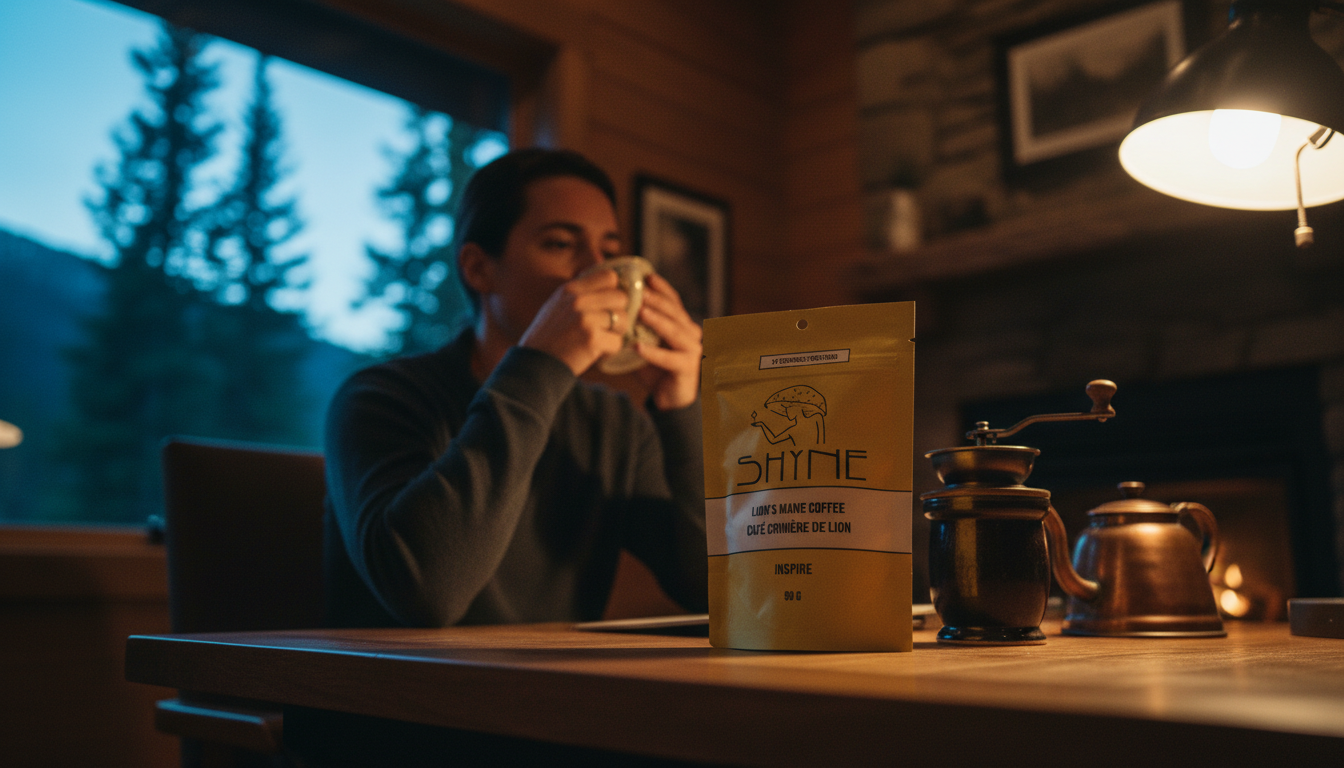
If a mushroom coffee contains coffee, it contains caffeine. Caffeine timing is the first thing to review before discussing mushroom ingredients.
Compare:
| Drink | Typical caffeine range |
|---|---|
| Regular coffee | Often about 80-120mg per cup, but varies widely |
| Shyne mushroom coffee | Check the product label for the exact amount |
| Black tea | Often lower than coffee, but varies |
| Green tea | Often lower than black tea, but varies |
| Decaf coffee | Usually small amounts, not always zero |
Individual caffeine tolerance varies. Some people can drink coffee early afternoon and feel fine. Others need an earlier cutoff.
Why Timing Matters
Caffeine can stay in the body for hours. The practical issue is not only whether you can fall asleep. It is also whether late caffeine fits your evening routine and how you feel the next day.
A simple approach:
- Start with morning coffee only.
- Avoid late-day caffeine while you assess your baseline.
- If you add afternoon caffeine, track timing carefully.
- Avoid testing new caffeine routines before an important next day.
- Keep serving size consistent while testing.
This is a routine test, not a medical sleep assessment.
Mushroom Ingredients: Keep the Claims Narrow
Functional mushrooms are often discussed in research and traditional-use contexts. That does not mean mushroom coffee changes nighttime or relaxation outcomes.
| Ingredient | Careful way to describe it |
|---|---|
| Lion's Mane | Mushroom studied in cognitive-function research |
| Chaga | Mushroom discussed in antioxidant-related research and traditional tea use |
| Turkey Tail | Mushroom studied for polysaccharides and microbiome-related topics |
| Reishi | Mushroom with traditional-use history, usually discussed separately from coffee products |
A mushroom research category is not a reason to present a coffee product as a nighttime outcome product.
Build a Coffee Cutoff Test
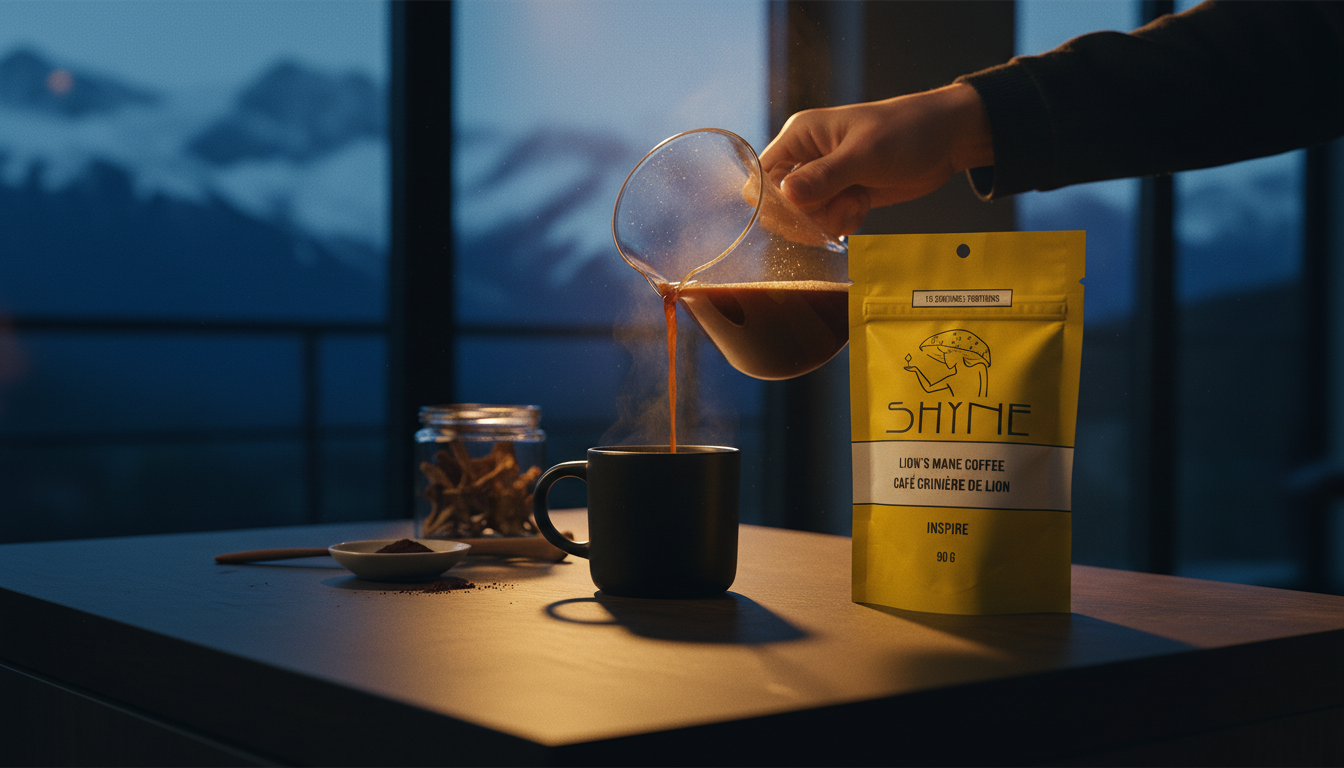
Try a one-week timing test.
| Day range | Test |
|---|---|
| Days 1-3 | Caffeine only before noon |
| Days 4-5 | Same amount, same morning timing |
| Days 6-7 | If appropriate, test one small timing change |
Track:
- last caffeine time
- serving size
- bedtime
- wake time
- evening routine
- next-morning notes
Do not change everything at once. If you change caffeine, bedtime, alcohol, screen time, and dinner timing together, you will not know what mattered.
Evening Routine Basics
A coffee article should not promise better sleep, but it can remind readers of common routine basics:
- Keep caffeine earlier if late caffeine bothers you.
- Keep evening lighting lower when possible.
- Avoid using more caffeine to compensate for every tired day.
- Give yourself a realistic wind-down period.
- Keep wake time reasonably consistent when possible.
- Ask for professional guidance if sleep problems persist.
These are general routine points, not product claims.
Where Shyne Fits
Shyne should be described as mushroom coffee, not as a nighttime outcome product.
The safest Shyne details are:
- caffeine amount
- coffee format
- mushroom extract amount
- flavour notes
- ingredients
- serving size
- preparation method
- routine fit
If someone chooses Shyne, the decision should be based on taste, caffeine amount, ingredients, convenience, and whether it fits their morning or early-day routine.
Do not position Shyne around nighttime outcomes, relaxation outcomes, medical outcomes, or symptom outcomes.
Frequently Asked Questions
Can mushroom coffee fit an early-day routine?
Yes, if the caffeine amount and timing fit your day. Compare caffeine amount, timing, serving size, ingredients, and routine fit.
Is mushroom coffee different from regular coffee?
That depends on caffeine amount, timing, serving size, and ingredients. A lower-caffeine product may be easier to compare, but it should not be framed around nighttime outcomes.
When should I stop drinking mushroom coffee?
Start with an earlier cutoff, such as morning only, then adjust based on your own routine and professional guidance if needed.
How should Turkey Tail be described here?
Keep it factual. Turkey Tail can be discussed as a mushroom studied for polysaccharides and microbiome-related topics, not as a nighttime outcome product.
What if I already sleep poorly?
Keep caffeine earlier and speak with a qualified healthcare professional if sleep problems are ongoing, severe, or affecting daily life.
The Bottom Line
Mushroom coffee should stay in the coffee lane. The main timing-related issue is caffeine timing, not mushroom promises.
The practical takeaway: check the caffeine amount, choose an early cutoff, keep serving size consistent, and track your own routine.
Where Shyne fits: Shyne can be compared by caffeine amount, flavour, ingredients, mushroom extract amount, serving size, and preparation. It should not be framed around nighttime outcomes or relaxation outcomes.
Related Reading:
- The Best Time to Drink Mushroom Coffee
- Coffee Without Jitters
- Mushroom Coffee and Midlife Routines
- What Is Mushroom Coffee?
This content is for informational purposes only and is not a substitute for professional medical advice.